
South Carolina Court System Overview
South Carolina's Constitution creates one unified judicial system. The Supreme Court is both the court of last resort and the administrative head. Beneath it sits one statewide Court of Appeals, not a set of geographic appellate districts. Circuit Court is the general-jurisdiction trial court and functions as Common Pleas for civil matters and General Sessions for criminal matters. Family Court and Probate Court hold specialized trial jurisdiction. Magistrates and Municipal Courts are summary courts, while Masters-in-Equity decide referred equity cases.
Appeal routes depend on the first court and subject. A summary-court appeal ordinarily goes to Circuit Court. Most qualifying final decisions from Circuit, Family, Probate, and state administrative bodies go to the Court of Appeals. Death sentences, substantial constitutional questions, and other categories fixed by law can proceed directly to the Supreme Court. Supreme Court review of a Court of Appeals decision is usually discretionary through certiorari, meaning the high court chooses whether to hear the petition.
Typical appeals path: Magistrates or Municipal Court › Circuit Court › South Carolina Court of Appeals › Supreme Court of South Carolina
| Court Level | Court Name | Jurisdiction / Case Types | Number in South Carolina |
|---|---|---|---|
| Court of Last Resort | Supreme Court of South Carolina | Final review, direct categories, original writs, discipline, and rulemaking | One court, five justices |
| Intermediate Appellate | South Carolina Court of Appeals | Most appeals from trial courts and appropriate agency decisions | One statewide court, nine judges |
| General Trial | Circuit Court | Common Pleas civil and General Sessions criminal jurisdiction | 16 circuits across 46 counties |
| Specialized Trial | Family Court | Domestic relations, adoption, child protection, and juvenile matters | Statewide in 16 circuits |
| Specialized County | Probate Court | Estates, wills, guardianships, marriage licenses, and commitments | 46 county courts |
| Equity | Masters-in-Equity | Referred foreclosures, partitions, accountings, and other equity matters | Circuit-level officers |
| Summary | Magistrates Courts | Limited civil, eviction, summary crime, warrants, bonds, and traffic | County-based courts |
| Summary | Municipal Courts | City ordinances and eligible state or traffic offenses | Created by municipalities |
South Carolina Supreme Court
The Supreme Court of South Carolina has five justices and is the final state tribunal for civil and criminal matters. South Carolina has no separate criminal high court. The General Assembly elects appellate judges after the state screening process. The Court hears direct appeals assigned by law, including death sentences and significant constitutional questions, and may review Court of Appeals decisions by certiorari. It also exercises original writ jurisdiction, regulates bar admission, oversees attorney and judicial discipline, and adopts rules for the unified system.
Supreme Court opinions bind lower South Carolina courts. Its administrative role is also central: Court Administration coordinates case management, reporting, calendars, language access, technology, and standards, even though elected clerks and probate judges remain operational custodians. An appeal does not retry the case automatically. Review usually concerns preserved issues in the record and can result in affirmance, reversal, modification, or remand.
South Carolina Court of Appeals
The South Carolina Court of Appeals is a single statewide intermediate court. It has a chief judge and eight associate judges and usually hears cases in panels. It is not divided into geographic districts or assigned by county. Most final Circuit and Family Court judgments, along with appropriate Probate and administrative matters, pass through this court unless law places the subject within direct Supreme Court jurisdiction.
The appellate record includes the notice of appeal, designated lower-court record, briefs, motions, oral-argument information, orders, opinion, and remittitur. A party generally must act within the applicable appellate rule deadline after written notice of entry. Court of Appeals review focuses on preserved error in the trial record. A later petition may ask the Supreme Court to grant certiorari, but review is not automatic.
| Appellate Body | Organization | Coverage |
|---|---|---|
| South Carolina Court of Appeals | Chief judge and eight associate judges sitting in panels | All 46 counties statewide |
South Carolina Circuit Courts
Circuit Court is the general-jurisdiction trial level. Its Court of Common Pleas side hears major civil, contract, tort, property, injunction, foreclosure, and lower-court or agency appeal matters. Its Court of General Sessions side hears felonies, higher misdemeanors, indictments, pleas, trials, sentencing, and related motions. Sixteen judicial circuits group all 46 counties. Circuit judges are elected by the General Assembly and rotate, so a judge need not be resident in the county where a term is held.
Each county Clerk of Court maintains the local Common Pleas and General Sessions files. General Sessions prosecutors are Circuit Solicitors, one elected solicitor for each circuit. An indictment is a grand-jury accusation, not proof of guilt. Case numbers, dockets, and public images are found through the county-selected Public Index, while paper or non-imaged documents remain with the clerk. The South Carolina county directory routes to the filing county.
Electronic filing can add a statewide technology charge to an underlying court fee. The official e-filing technology fee schedule shows how the unified court system supports local files:
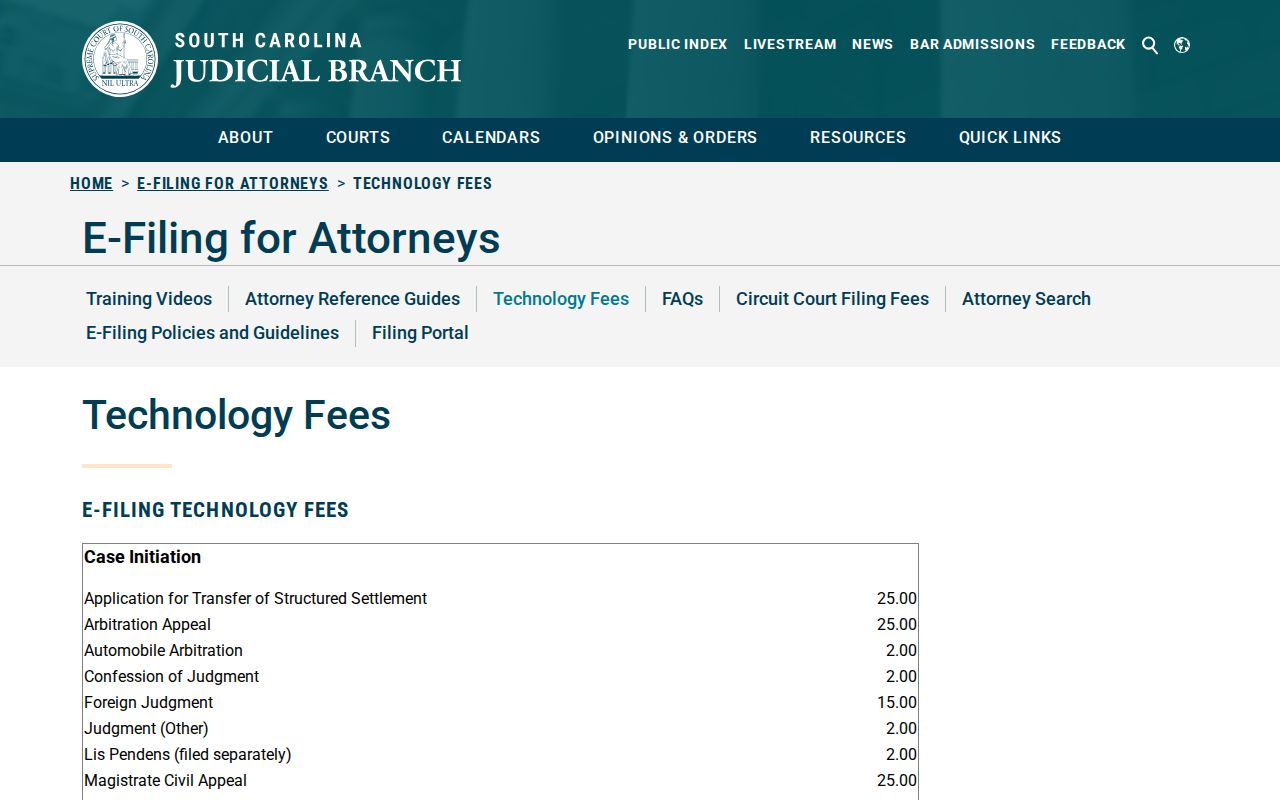
Fee administration does not merge local custody. The county clerk still accepts, indexes, and certifies the official trial record.
South Carolina Jurisdiction Comparison
South Carolina does not place all trial work in Circuit Court. Subject and remedy determine the forum. Common Pleas has general civil jurisdiction, while General Sessions handles serious criminal charges. Family and Probate Courts have specialized grants. Magistrates Courts have limited civil and summary jurisdiction, and Municipal Courts focus on offenses arising within city boundaries. The table highlights the main distinctions without replacing the law governing a particular claim.
| Circuit Court | Family or Probate | Magistrates or Municipal | |
|---|---|---|---|
| Main Civil Scope | General civil and equity | Domestic relations or estates and protected persons | Limited civil, including Magistrates claims up to $7,500 |
| Criminal Scope | Felonies and higher misdemeanors | Juvenile matters in Family Court; no ordinary criminal docket in Probate | Summary offenses, preliminary matters, traffic, and ordinances |
| Local Custodian | County Clerk of Court | Clerk of Court for Family; Probate Court for probate | Issuing Magistrates or Municipal Court |
| Normal Appeal Direction | Court of Appeals unless direct category | Route set by subject and law | Circuit Court |
South Carolina Appeals Paths
A civil plaintiff files with the Clerk of Court where venue lies. A General Sessions case often moves from arrest or warrant through prosecutor review and grand-jury indictment. Summary matters begin in a Magistrates or Municipal Court. Appeals are based on the record and preserved issues. Circuit or appellate review does not erase the original docket, and a venue transfer moves proceedings without making the prior history disappear.
Criminal path: Arrest or warrant › First appearance and bond › Solicitor review › Grand-jury indictment › General Sessions plea or trial › Sentence › Court of Appeals › Supreme Court petition
Civil path: Common Pleas complaint › Answer › Discovery and motions › Mediation or trial › Judgment › Court of Appeals › Supreme Court petition
Summary path: Magistrates or Municipal case › Hearing and judgment or disposition › Circuit Court appeal › Further review as authorized
South Carolina Specialized Courts
Family Court is a statewide trial court organized on the same circuit map. It hears divorce, separate support, equitable division, custody, visitation, child and spousal support, adoption, termination of parental rights, domestic abuse, child protection, and juvenile delinquency. The county Clerk of Court supports the Family docket, but access is more restricted than in an ordinary Common Pleas file. Adoption and juvenile records are not general public case indexes.
Each county has an elected Probate Judge. Probate Court handles decedent estates, wills, fiduciaries, guardianships, conservatorships, marriage licenses, and assigned mental-health matters. Masters-in-Equity are circuit-level judicial officers who decide referred nonjury equity matters, notably mortgage foreclosures, partitions, and accountings. Treatment courts and the Business Court Program operate within existing legal jurisdiction rather than as new constitutional tiers.
South Carolina Summary Courts
Magistrates Courts are county-based. Their civil jurisdiction generally reaches claims up to $7,500 and includes small claims, claim-and-delivery, and landlord-tenant proceedings. Criminal work includes offenses within statutory punishment limits, warrants, bond and preliminary hearings, and traffic cases outside municipalities. Magistrates are appointed by the Governor with Senate advice and consent after county recommendation.
Municipal Courts hear city ordinance violations and eligible state offenses occurring within municipal boundaries. Common limits are a fine up to $500 or 30 days, subject to the statute for a specific offense. Municipal judges are appointed by municipalities. Summary-court appeals ordinarily go to Circuit Court, and the lower court certifies its record and statement of proceedings. Record requests go to the issuing court, not automatically to the county Clerk of Court.
Federal Courts in South Carolina
Federal courts are separate from the South Carolina court system. The state forms one U.S. District Court for the District of South Carolina, within the Fourth Circuit. Federal criminal, civil-rights, federal statutory, diversity, habeas, and other authorized cases do not reliably appear in the state Public Index. The state also has one U.S. Bankruptcy Court for the District of South Carolina.
Federal dockets use PACER. The national PACER registration and records service provides access to participating federal courts:
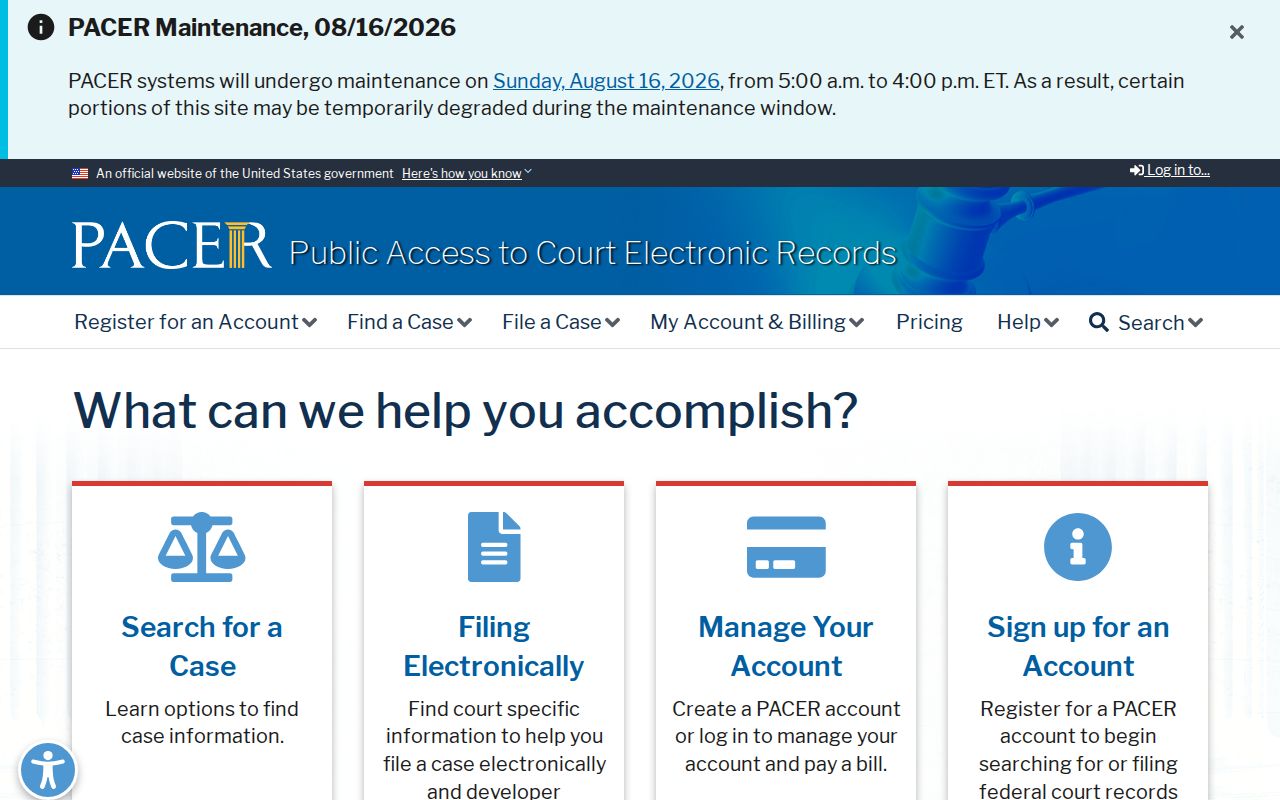
District records can show parties, counsel, judges, event chronology, case nature, status, and judgments. Federal clerk, PACER, bankruptcy, Fourth Circuit, and federal custody channels remain distinct from county trial custodians.
The U.S. Court of Appeals for the Fourth Circuit is the federal appellate court for South Carolina:
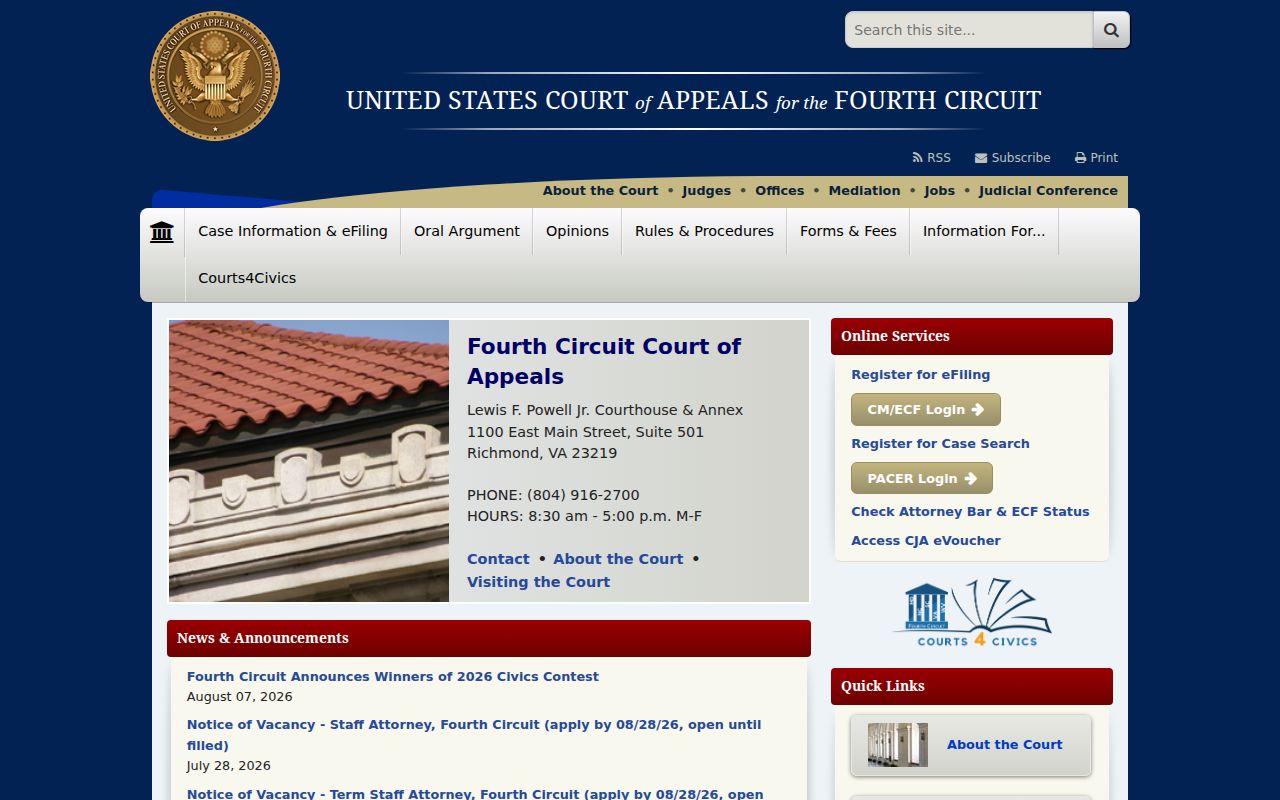
Fourth Circuit dockets and opinions belong to the federal system and will not appear in South Carolina's county Public Index.
The U.S. Bankruptcy Court for the District of South Carolina also maintains its own federal records:
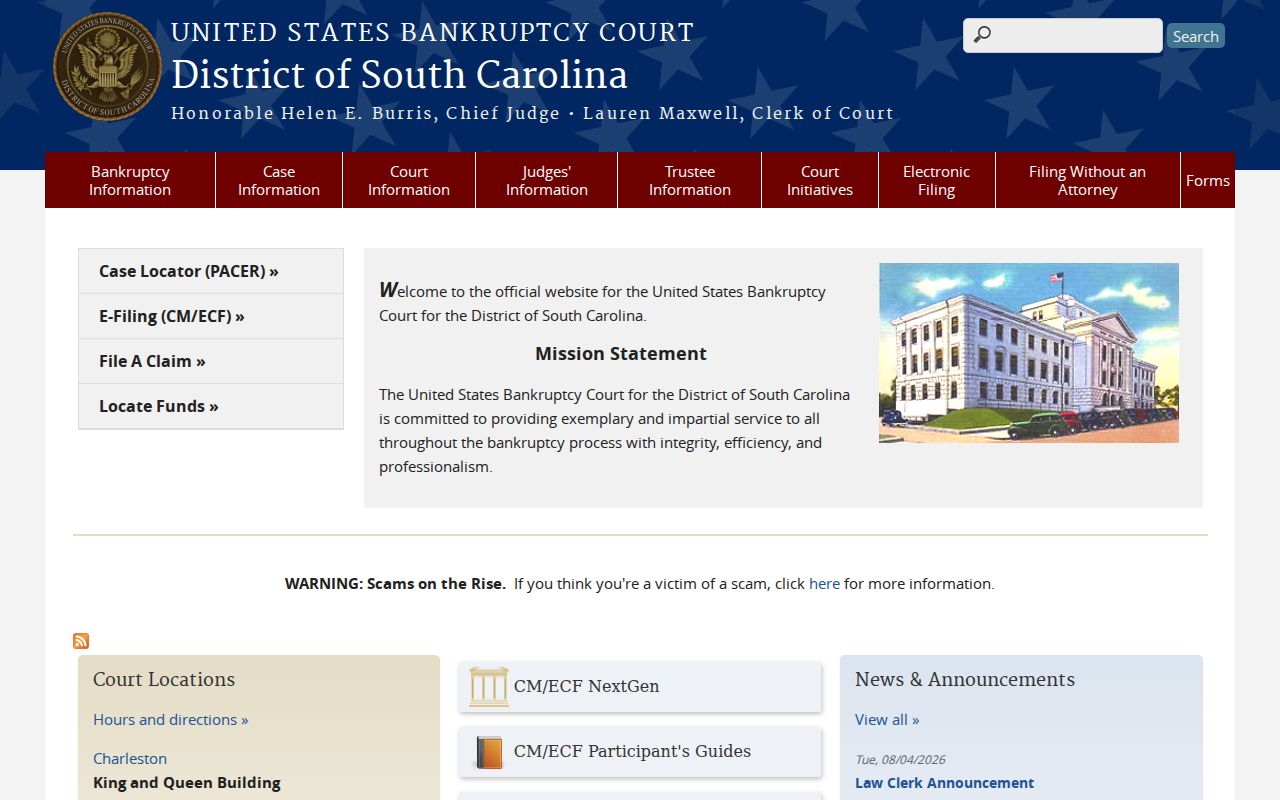
Bankruptcy searches use federal CM/ECF and PACER channels, separate from state civil judgments and county clerk files.
South Carolina Court System Boundaries
State agencies maintain records that may follow a court event but are not court files. For example, the SLED sex-offender registry is a statewide law-enforcement system with its own search and notification rules:
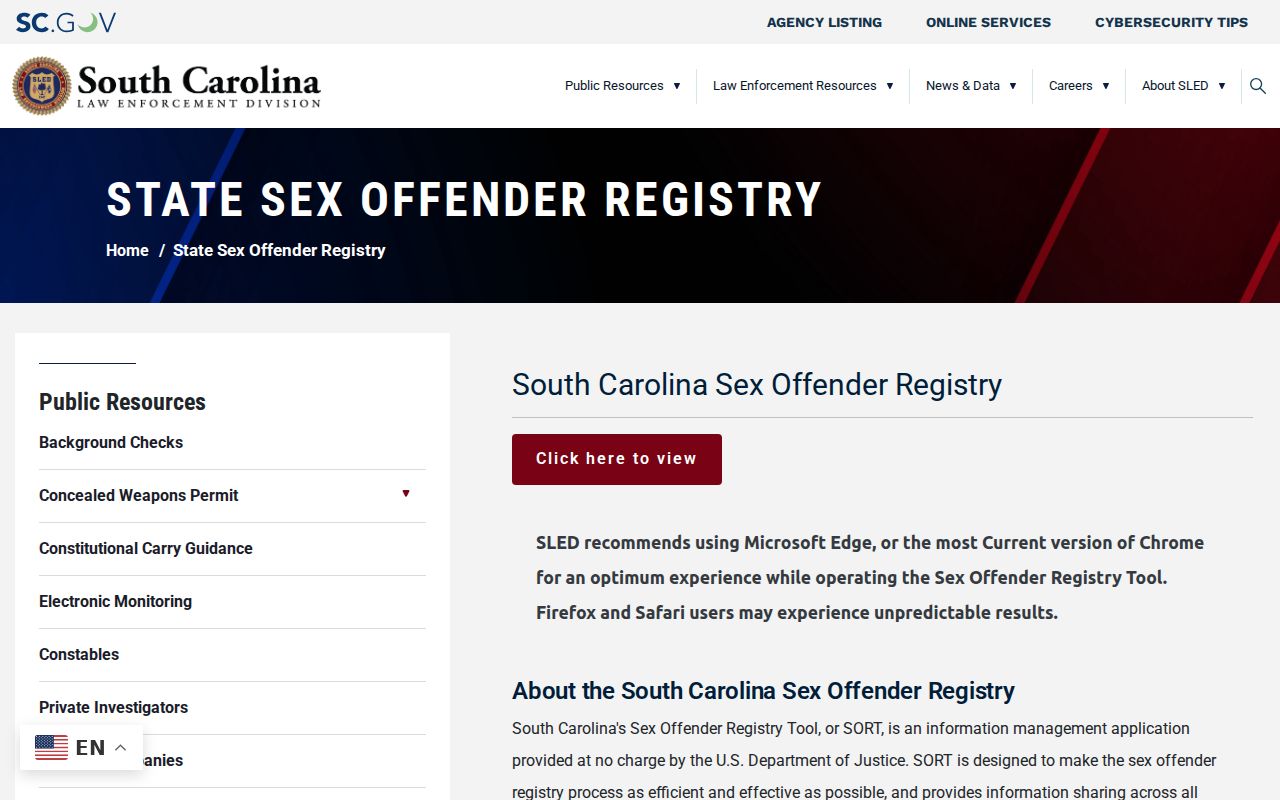
A registry profile does not replace the indictment, disposition, or sentence sheet kept by the court. Corrections, driver, and vital-record systems likewise answer different questions.
The South Carolina public health vital-record fee page illustrates another agency channel:
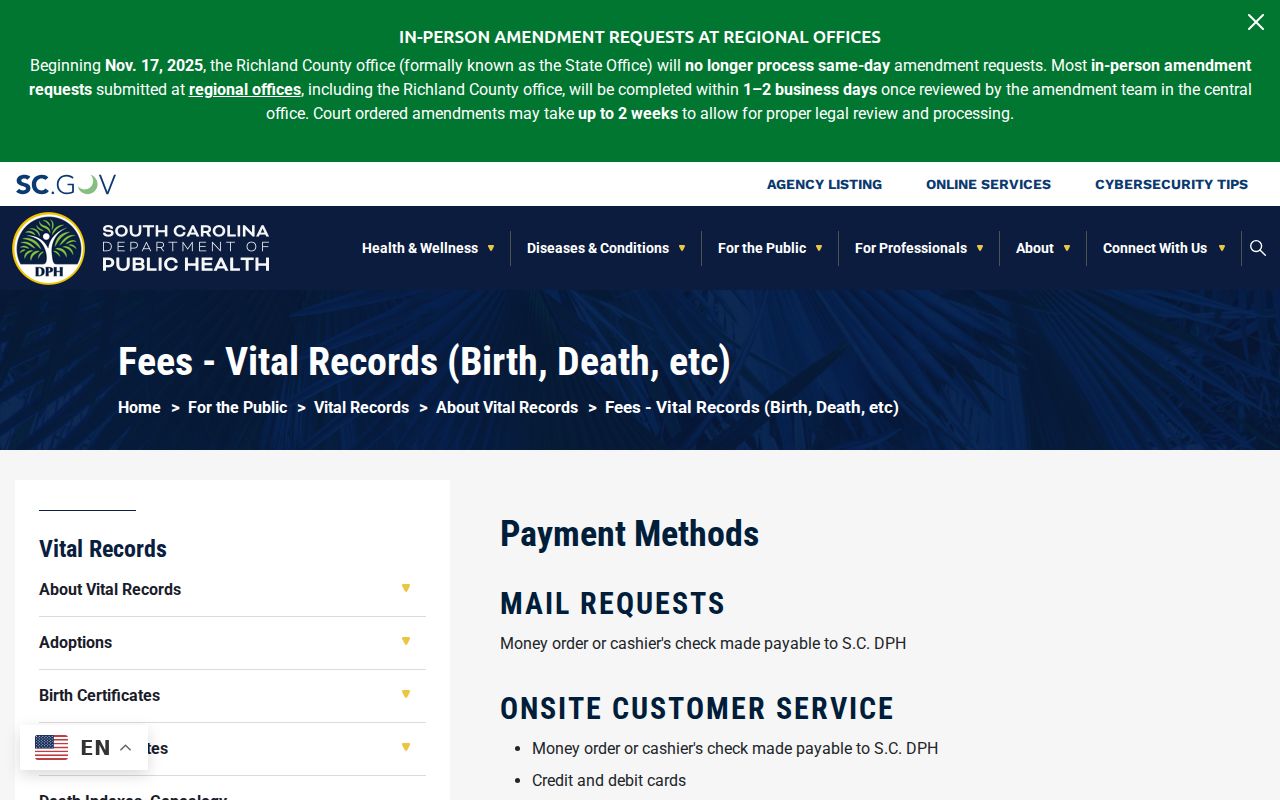
A DPH divorce report is not the full Family Court case, just as a marriage certificate is not the original county Probate Court file.
South Carolina Court System History
The modern unified system rests on Article V of the 1895 Constitution as substantially revised by the 1973 Judicial Article. That change centralized administrative authority in the Supreme Court and organized uniform levels after earlier local and legislative variation. The permanent modern Court of Appeals was created in 1983 to reduce the Supreme Court's workload. Circuit Court retains the English names Common Pleas and General Sessions.
Electronic access later grew through the statewide case-management system and eFlex. April 14, 2014 privacy rules created a practical line for image availability: later filed or scanned documents may display after acceptance, while each clerk decides whether to verify earlier images. Beginning in 2026, home addresses were removed from public index displays. Technology has widened access, but county clerks and courts remain the official trial-record custodians.
Find South Carolina County Courts
Trial case files, docket corrections, and certified copies remain tied to the place of filing. Use the directory of all 46 South Carolina counties to reach the local court site and record custodian. Choose the Clerk of Court for Common Pleas, General Sessions, or Family Court; Probate Court for estates and marriage licenses; and the issuing Magistrates or Municipal Court for summary matters. The correct court level saves time and prevents a state or federal system from being mistaken for the local case file.