
Search South Carolina Court Records
The Judicial Branch Case Records Search gateway routes users to a separate Trial Court Public Index for each county and to participating municipal indexes. It is statewide navigation, not one merged database. Cookies and JavaScript must be enabled, and a browser may need permission to open case details in a new window. The county index commonly covers Common Pleas, General Sessions, and Family Court data, with locally loaded summary matters varying by place. Appellate cases use C-Track Public Access instead. An unlisted municipal court must be contacted directly.
Start with the full legal name, likely filing county, court division, and an approximate filing period. A case number is the strongest key. If the county is unknown, the gateway offers a County, City, or ZIP locator. Similar names require care because home addresses were removed from public index results in 2026. Search name variants and compare the court, case type, filing dates, party roles, and counsel. A blank search is not proof that no South Carolina court record exists.
- Open the official gateway and select the likely county or participating municipal court.
- Choose case-number or party-name search. Add a date range, court agency, or case type when available.
- Open the matching case and review status, parties, actions, financial entries, hearings, and published images.
- If an image is absent, contact the filing county's Clerk of Court or the issuing summary court.
- Ask for a plain, certified, or exemplified copy based on what the receiving institution requires.
The statewide eFlex service is the filing channel for authorized electronic filers, while the public searches accepted records through Public Index. The official login illustrates that distinction:
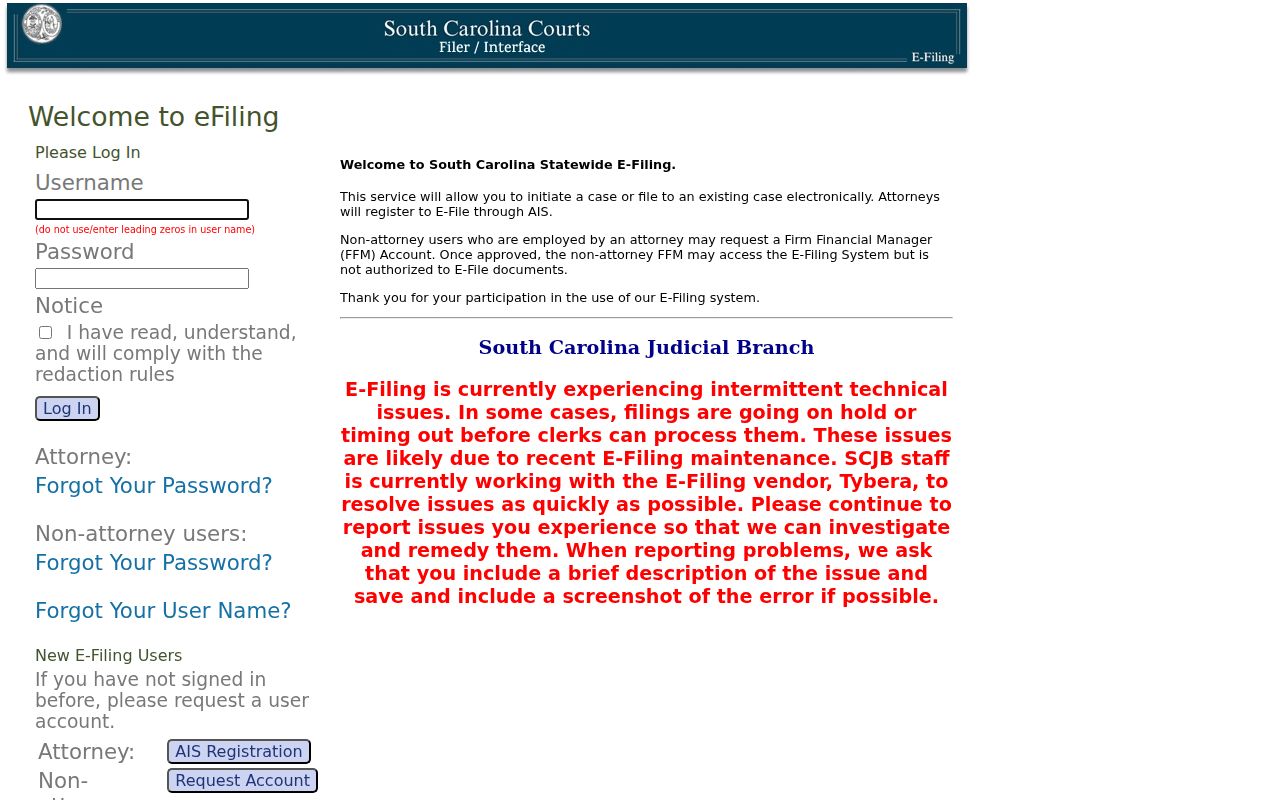
Once a clerk accepts an e-filed document, the electronic version is official, but confidential and sealed material remains outside public view.
South Carolina Record Search Fields
Each county deployment can expose a slightly different set of fields, yet the common controls follow the statewide case-management design. Case-number mode is best when the full identifier is known. Party mode supports a surname or business name and can often use Begins With or Contains. Court Agency and Case Type filters prevent a Family Court result from being confused with a Common Pleas or General Sessions matter. Dates can reduce a large common-name result set.
| Field Label | Type | Required | Notes / Format |
|---|---|---|---|
| Search Type or Tab | Tabs or radio | One mode | Case Number, Party Name, or a local court search. |
| Case Number | Text | Number mode | Use the full identifier, such as 2016CP2300001. |
| Last or Business Name | Text | Party mode | May support exact, Begins With, or Contains. |
| First and Middle Name | Text | No | Refines a person search; initials and spelling matter. |
| Court Agency | Dropdown | No | Options depend on courts loaded in the county index. |
| Case Type | Dropdown | No | Choices vary by agency and county. |
| Filing Date Range | Date | No | Narrows common-name results. |
| Captcha | Challenge | When shown | Controls automated use. |
A trial number often follows YYYYCCNNSSSSS. The year comes first, then the court code, county code, and sequence. CP means Common Pleas, GS means General Sessions, DR denotes domestic relations, and ES denotes estate. Summary courts can use agency identifiers and other sequences. Older records or a local municipal matter may not follow the same public display.
Types of South Carolina Court Records
South Carolina court records follow jurisdiction. Common Pleas files general civil suits, foreclosures, judgments, and appeals from summary courts or agencies. General Sessions records felony and higher misdemeanor prosecutions, including indictments, pleas, motions, sentence sheets, and appeals. Family Court manages divorce, custody, support, adoption, abuse and neglect, and juvenile matters, though public access differs sharply among those files. Probate Court, a distinct county office, holds estates, wills, guardianships, conservatorships, and marriage licenses.
Magistrates Courts create small-claim, eviction, warrant, bond, preliminary-hearing, and eligible traffic records. Municipal Courts keep city ordinance, traffic, and summary-offense files. Masters-in-Equity handle referred equity matters such as foreclosure and partition. The correct custodian is based on the court that heard the case, not merely on the subject's home county.
- Civil: complaints, answers, motions, orders, judgments, executions, and appeal notices.
- Criminal: charging references, indictments, pleas, verdicts, sentences, costs, and appeals.
- Family: domestic case dockets and decrees, with protected child and financial information withheld.
- Probate: wills, inventories, fiduciary records, accountings, guardianships, and marriage returns.
- Summary: small claims, evictions, citations, warrants, bonds, and municipal ordinance matters.
The official clerk statute chapter describes the elected Clerk of Court and ex-officio duties that unite Common Pleas, General Sessions, and Family Court recordkeeping. Its page provides useful context for the county custodian:
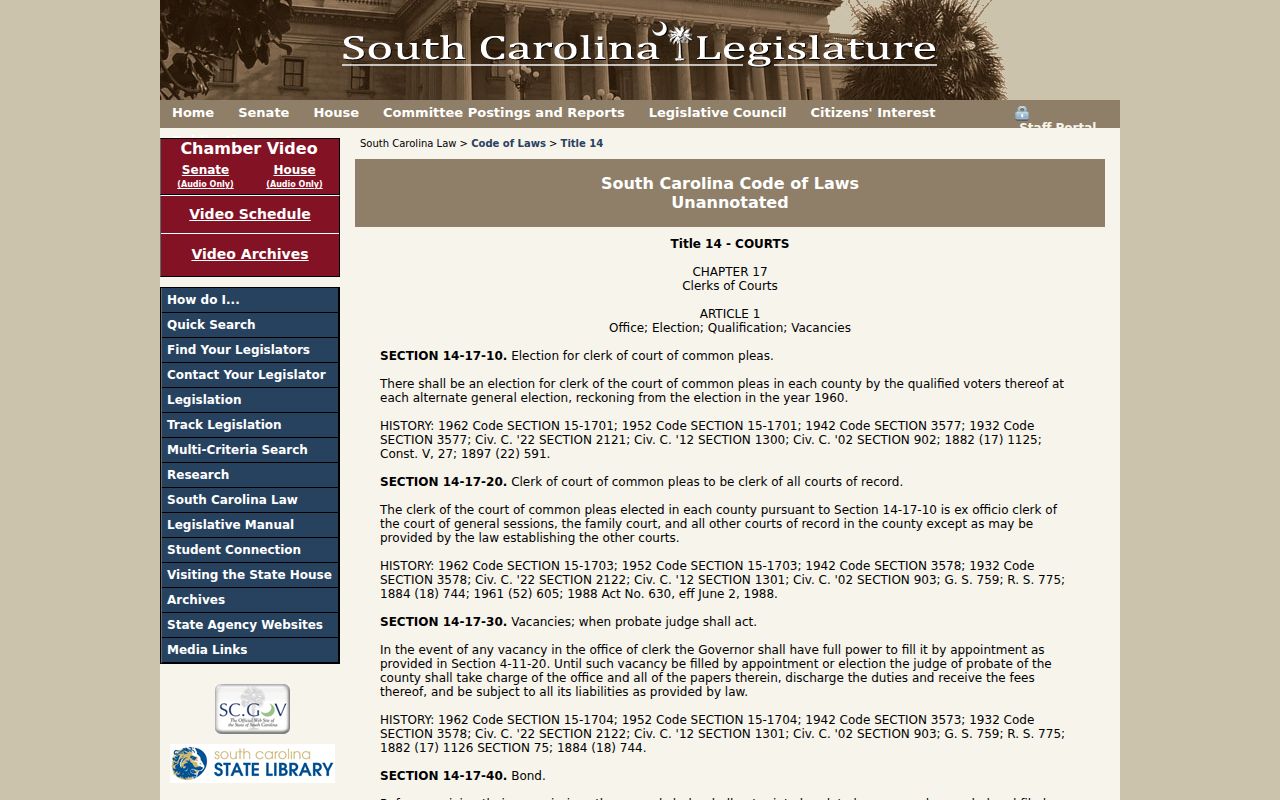
Probate, magistrate, and municipal records remain outside that unified trial-clerk portfolio, so court type still controls the request route.
What South Carolina Court Records Show
A Public Index detail page is both an identity check and a map to the official file. Read the court agency, case number, case type, and filing date before relying on a name match. Party roles explain who brought or answered the matter. The action log is chronological, but an entry label is only shorthand. “Motion filed” does not mean “motion granted,” and “disposed” means that phase ended, not that a person was convicted or a debt was paid.
| Field | What It Shows |
|---|---|
| Case Number | Year, court code, county code, and sequence in a common trial format. |
| Agency and Case Type | The court division and category that determine jurisdiction and custodian. |
| Filing Date and Status | When the matter began and whether it is pending, disposed, stayed, transferred, or closed. |
| Parties and Counsel | Indexed names, legal roles, and attorney associations; identity still requires comparison. |
| Events and Hearings | Filings, service, motions, hearings, orders, continuances, judgments, and appeals. |
| Money | Costs, fines, restitution, judgments, bonds, payments, or balances when entered. |
| Images | Public accepted e-filed or scanned documents made available by the clerk. |
| Disposition | The outcome recorded for the case or charge; inspect the signed order for legal effect. |
Documents filed or scanned on or after April 14, 2014 may generally display after acceptance. Each clerk decides whether earlier images are verified and published. A transcript is a separate product ordered through the court reporter, and physical exhibits can require a specific clerk request. Future hearing data should be confirmed near the date because rosters and continuances change.
South Carolina Court Records Access
S.C. Code section 30-4-30 establishes the Freedom of Information Act right to inspect and copy public records, subject to exemptions, response rules, and reasonable fees. Judicial case-file access also follows Supreme Court rules and the court's control of its records. E-Filing Rule 10 governs public electronic access, confidential lists, sealed items, and sensitive information. Rule 41.2 requires redaction of protected identifiers, while Rule 41.1 supplies a judicial procedure for sealing.
Anyone may request an existing public record from the proper custodian. The request should identify the case number, names, division, approximate date, and exact document. It should state whether an electronic, plain paper, certified, or exemplified copy is needed. South Carolina has no single statewide copy price. Public Index metadata is free, while page, search, certification, archive retrieval, and delivery charges follow the county schedule. A large request can require a deposit for retrieval, redaction, and copying.
Note: Ask for the specific authority and any segregable public portion when a South Carolina court records request is denied.
Remote proceedings may affect how the public observes a hearing, but not which office owns the case file. The official remote communication order notice shows the statewide framework:
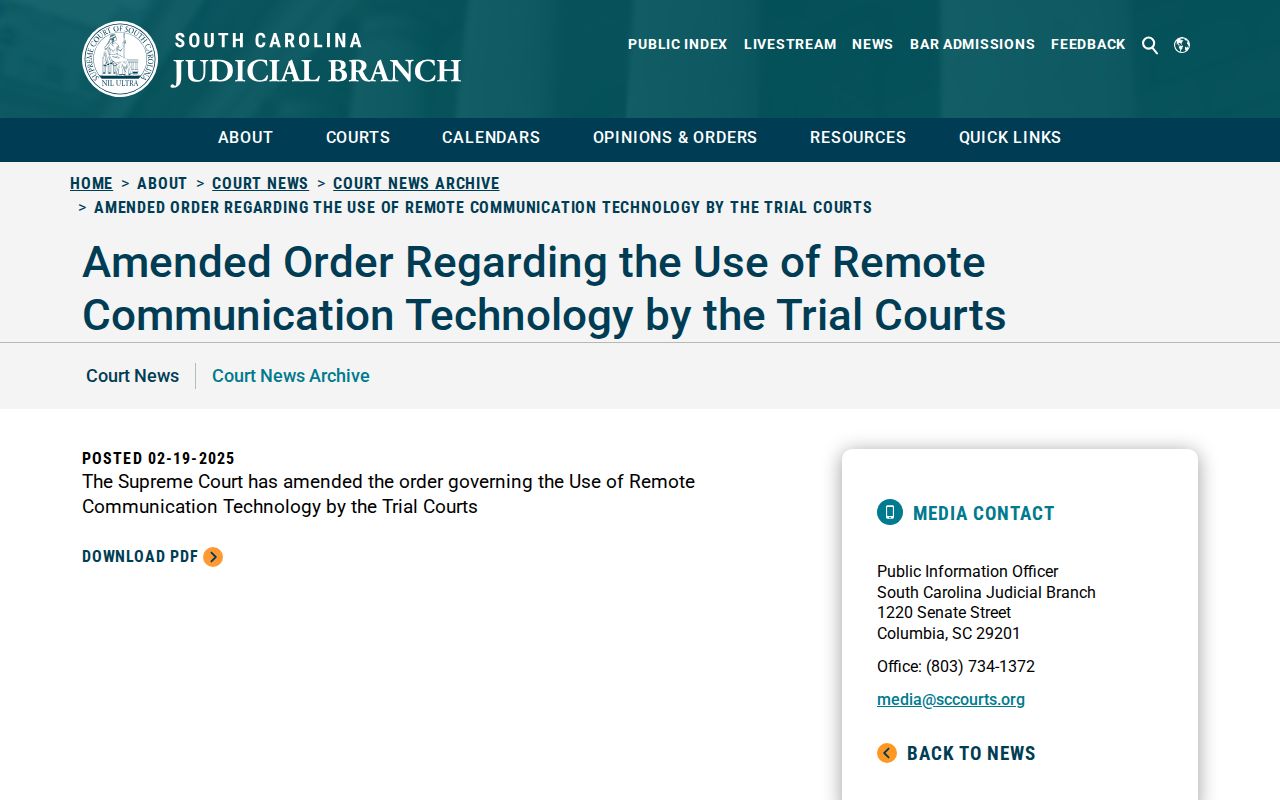
A clerk remains the source for the docket, order, and certified copy even when a hearing occurred through remote technology.
Restricted South Carolina Court Records
Juvenile, adoption, and mental-health files carry strict limits. A Family Court juvenile file is not an ordinary public criminal index. Adoption files and identifying information are sealed. Probate or Family commitment records can contain protected medical evidence. Parties, counsel, guardians, and authorized agencies may have rights that the public does not. A general FOIA request cannot defeat those restrictions.
Sealed cases and documents are unavailable through public electronic or other channels unless authority or a later order allows access. Social Security numbers, taxpayer identifiers, financial account numbers, protected minor information, and confidential reference-list values are not displayed. Home addresses no longer appear in existing or new Public Index cases as of January 1, 2026. Expungement is separate from sealing and applies only when statute permits. General Sessions applicants normally begin with the Circuit Solicitor where the offense occurred; qualifying summary-court dismissals follow another route. Never infer eligibility from a docket label alone.
South Carolina Record System Boundaries
A court index is not a custody locator. State-sentenced prisoners are tracked by the South Carolina Department of Corrections, county detainees by local jail systems, and federal prisoners by a separate federal source. The SCDC family-services page shows how visitation, mail, telephone, and funds sit outside South Carolina court records:
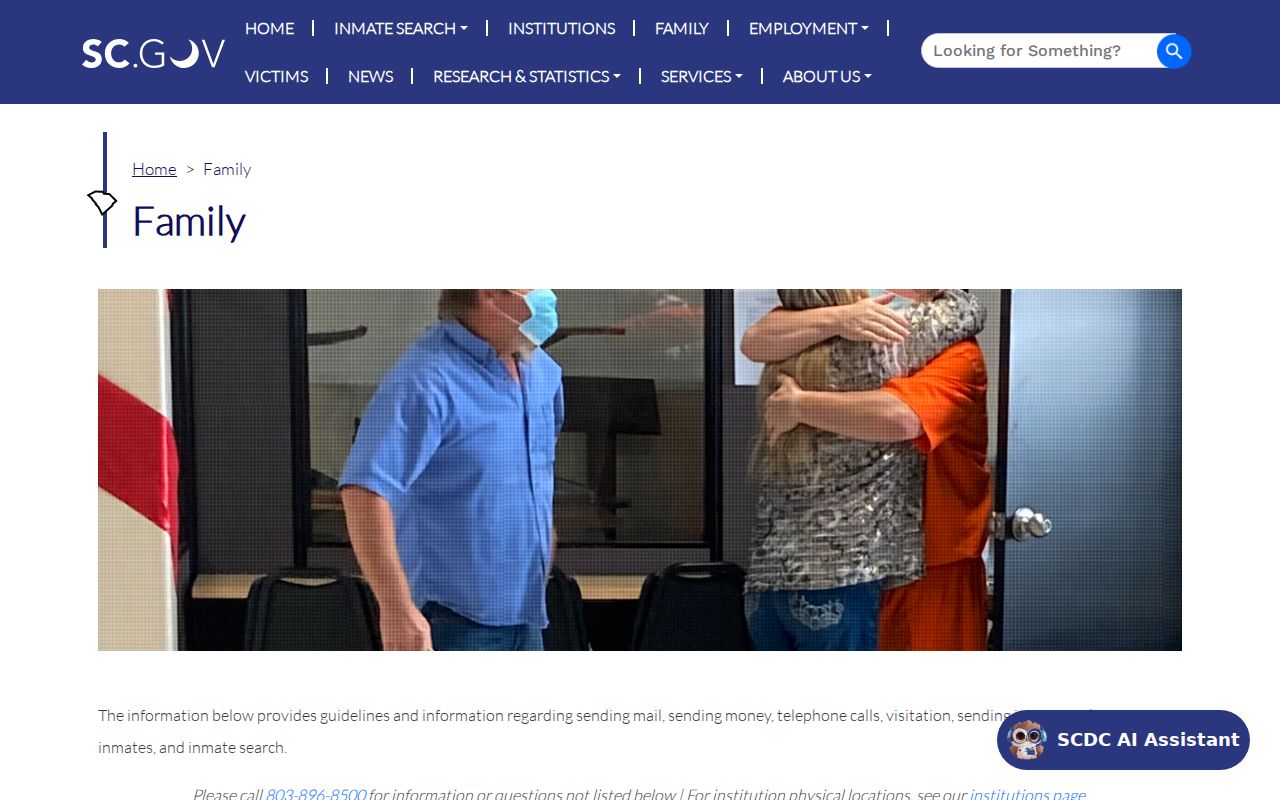
The case file can state a sentence, yet current custody and facility rules must be checked with the corrections custodian.
Federal prosecutions also use a separate docket system and are not reliably found in county Public Index results. The Federal Bureau of Prisons inmate locator is one federal custody channel:
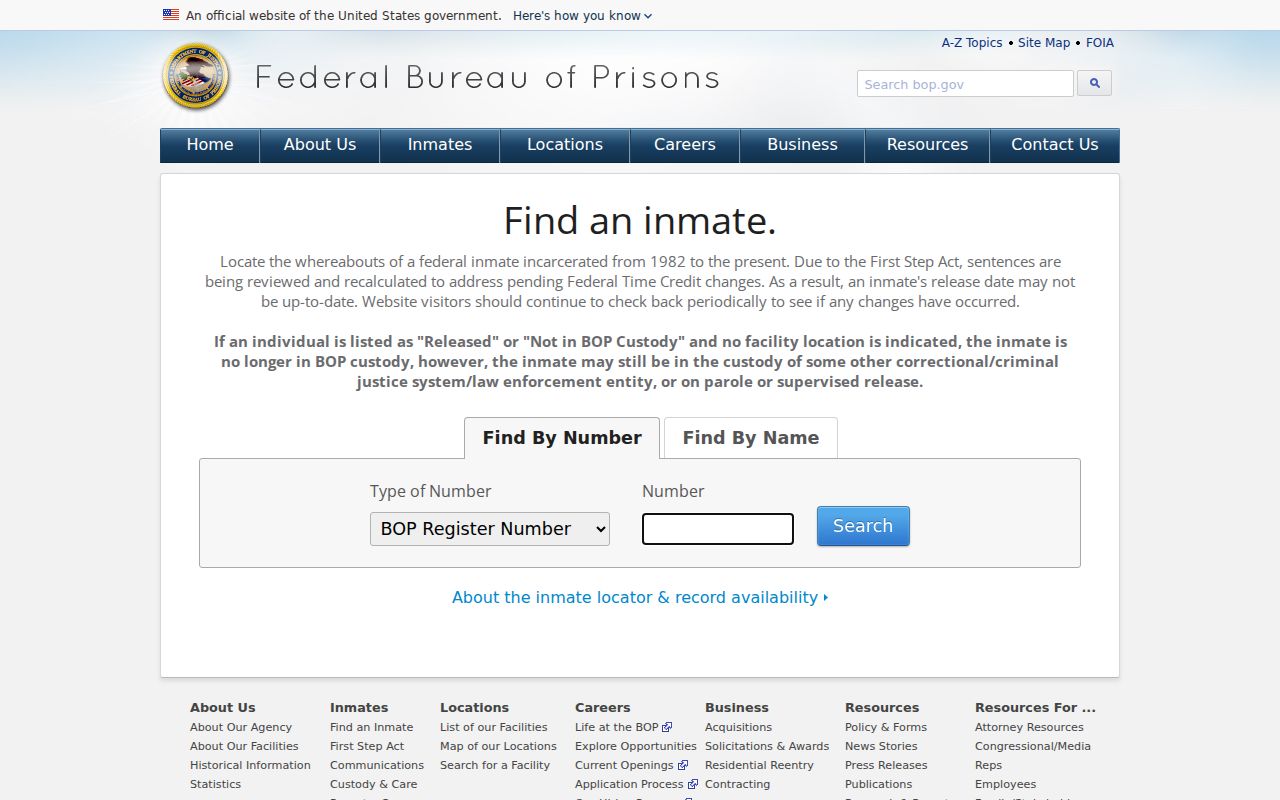
For a federal case record, use the District of South Carolina and PACER rather than treating a custody match as the court file.
Find South Carolina Record Custodians
Use the South Carolina county directory to identify the filing county and its official access points. Common Pleas, General Sessions, and Family Court case documents normally go to that county's Clerk of Court. Probate and marriage material goes to Probate Court. A small claim, eviction, magistrate warrant, or bond file goes to the issuing Magistrates Court. A city citation or ordinance case goes to the issuing Municipal Court. The county office can locate paper, microfilm, archived, or non-imaged records and quote the current copy charge.
Requests may be made online, in person, by mail, or through locally offered phone, email, or fax channels. Confirm hours, payment form, archival location, and delivery options before sending money. Include requester contact details, names, case number if known, division, year, document title, copy type, and return address. Telephone confirmation is useful, but it is not a certified court record.
Tip: Search by filing county, then ask the exact court custodian about older images, archives, certification fees, and accepted payment.