
Search South Carolina Court Records
The Judicial Branch provides an official Case Records Search gateway. It is statewide as a directory, yet trial searches still open a selected county's Public Index. The gateway covers all counties and separately identifies participating Municipal Courts. Supreme Court and Court of Appeals matters use C-Track public access instead. A missing image or event in a local index is a reason to contact the custodian, not proof that the filing never existed. Older documents, exhibits, certified copies, and records from a municipality that does not participate may require a clerk request.
Start with a full legal name or complete case number. Trial numbers commonly encode the year, court code, county code, and sequence. CP identifies Common Pleas, GS identifies General Sessions, DR is used for Family Court, and ES marks an estate matter. Name searches can use first, middle, and last names, plus begins-with or contains options where offered. Narrow common names by court agency, case type, or filing dates. Cookies and JavaScript must be enabled, and detail screens may require pop-ups.
- Open the official gateway and choose the county where the action was filed. Use its County, City, or ZIP locator if venue is uncertain.
- Select case-number or party-name search. Enter the narrowest reliable details and try a business name when an entity is a party.
- Open the detail and compare parties, court agency, filing date, status, and case type before treating it as a match.
- Read the actions and open public images. Check a court roster for future hearings because schedules can change.
- Ask the filing Clerk, Probate Court, Magistrate, or Municipal Court for an omitted or certified document.
The South Carolina Judicial Branch homepage shows how statewide resources and court contacts are organized.
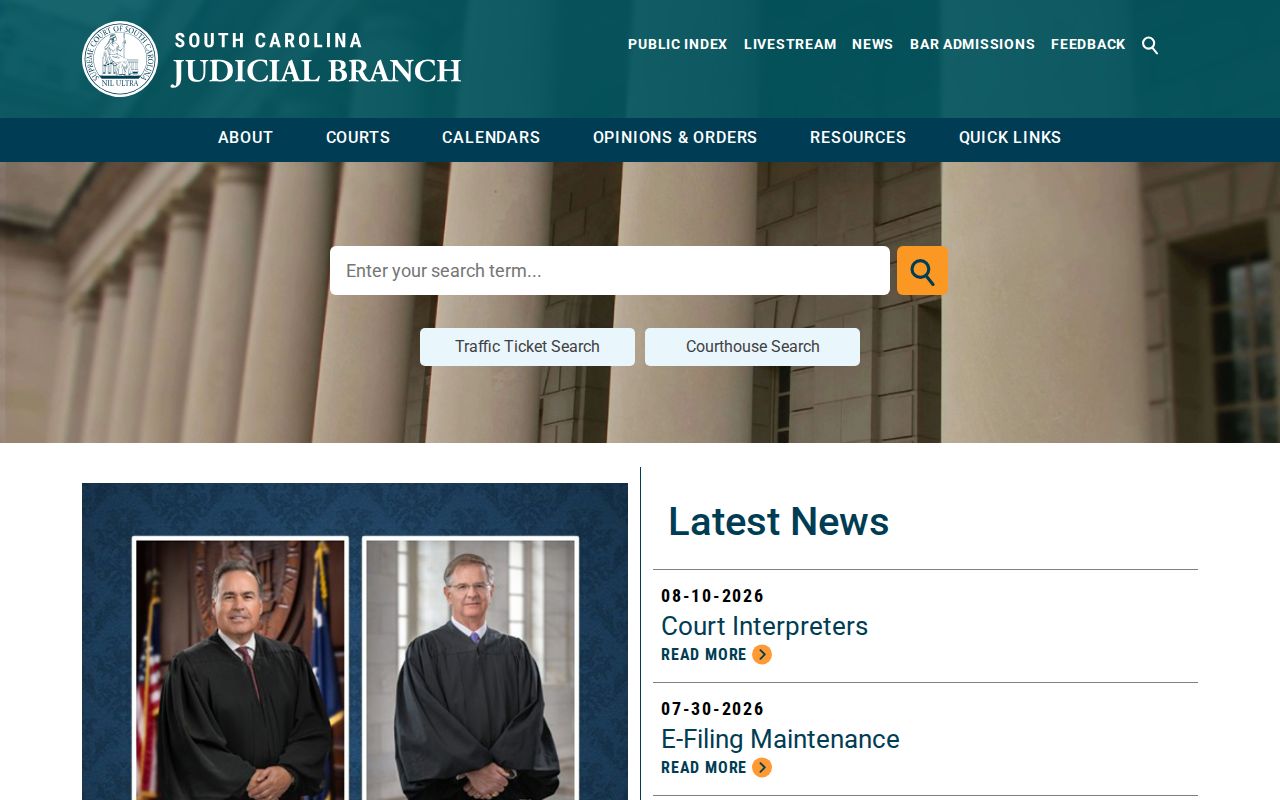
That official starting point connects the court hierarchy, county search gateway, rules, forms, and notices without replacing the county record custodian.
South Carolina Court System
South Carolina has a constitutionally unified judicial system. The Supreme Court of South Carolina is the court of last resort and administrative head. A single statewide Court of Appeals reviews most final decisions from Circuit, Family, Probate, and administrative matters. Circuit Court is the main trial court and has Common Pleas for civil cases and General Sessions for criminal cases. Sixteen circuits group the counties, while judges rotate within those circuits. The full South Carolina court system also includes Family Court, Probate Court, Magistrates Courts, Municipal Courts, and Masters-in-Equity.
Summary-court appeals ordinarily go to Circuit Court. Most later appeals proceed to the Court of Appeals, then may reach the Supreme Court through discretionary review. Certain matters, including death sentences and substantial constitutional questions, go directly to the high court. A record search follows the court that acted, not merely the level that could review it.
Typical appeal flow: Magistrates or Municipal Court › Circuit Court › Court of Appeals › Supreme Court of South Carolina.
| Court | Jurisdiction | Case Types |
|---|---|---|
| Supreme Court | Last resort and judicial administration | Appeal dockets, briefs, orders, opinions, remittiturs |
| Court of Appeals | Statewide intermediate review | Appeal filings, motions, calendars, opinions |
| Circuit Court | General trial jurisdiction | Common Pleas civil and General Sessions criminal files |
| Family and Probate | Specialized trial jurisdiction | Domestic, juvenile, estate, guardianship, and marriage matters |
| Magistrates and Municipal | Summary jurisdiction | Limited civil, eviction, traffic, ordinance, and eligible criminal cases |
South Carolina Court Record Types
Each South Carolina court produces a different file. Common Pleas civil records may contain a summons, complaint, service return, answer, motions, orders, verdict, judgment, execution, and appeal notice. General Sessions criminal records can show charging references, indictments, bond orders, motions, pleas, trials, sentence sheets, and restitution. Family Court creates divorce, custody, support, protection, adoption, abuse or neglect, and juvenile records. Probate Court keeps estate, guardianship, conservatorship, commitment, and marriage-license files. Summary courts hold limited civil, eviction, traffic, ordinance, and eligible misdemeanor matters.
- Criminal records: accusations, appearances, bond, disposition, sentence, and later appeal activity.
- Civil records: claims, defenses, motions, court orders, judgments, and enforcement entries.
- Family records: divorce and domestic matters, with strict limits for adoption and juvenile files.
- Probate records: wills, appointments, inventories, claims, accountings, distributions, and protected-person matters.
- Traffic records: citation, alleged conduct, plea, fine, disposition, failure to appear, and appeal.
Documents within a public case can still be sealed or redacted. Discovery may never be filed, physical exhibits and transcripts are often separate, and an online index may display only selected accepted images.
What South Carolina Records Show
A South Carolina Public Index result is a case summary, not a substitute for every filed document. It commonly identifies the court agency, case number, case type, filing date, status, parties and roles, lawyers, chronological actions, financial entries, and available images. Criminal files may add the charge, CDR code, warrant or indictment link, disposition, bond, and sentence data. A civil entry may show the cause, judgment, money ledger, and execution. Public home addresses are suppressed statewide in new and existing index cases beginning in 2026.
| Field | What It Shows |
|---|---|
| Case number | Year, court code, county code, and sequence in the common trial format. |
| Parties | Indexed legal names, roles, and linked counsel without protected identifiers. |
| Docket action | Filed or entered event; the actual order controls over a short label. |
| Status or disposition | The current stage or outcome, which must be read at charge and case level. |
| Hearing | Date, type, judge, or courtroom when entered; confirm near the event. |
| Money | Costs, fines, restitution, judgments, bond, payments, or balance as available. |
“Disposed” means that the court completed that phase. It does not always mean conviction, payment, or satisfaction. A filed motion was not necessarily granted. For proof of legal effect, obtain the signed order, judgment, decree, disposition, or sentence sheet from the custodian.
South Carolina State Record Systems
Several important searches sit outside the court index. SLED CATCH supplies paid, name-based South Carolina criminal-history reports. SLED SORT is the free sex-offender registry. The Department of Corrections searches current state prisoners, while county jails and participating custody agencies use local rosters or South Carolina VINE. SCDMV keeps a separate driving history with points and license action. The Department of Public Health issues eligible requesters state-held marriage certificates and divorce reports. None of those products replaces the originating court, sheriff, Probate Court, or Clerk record.
| System | What It Holds | Run By |
|---|---|---|
| SCDC Inmate Search | Current sentenced state-prison population | Department of Corrections |
| SLED CATCH | Name-based South Carolina criminal history | State Law Enforcement Division |
| SCDMV Driving Record | Driving history, points, and license action | Department of Motor Vehicles |
| DPH Vital Records | Eligible marriage-certificate and divorce-report requests | Department of Public Health |
The SCDC search notice defines the state-prison locator's coverage and exclusions.
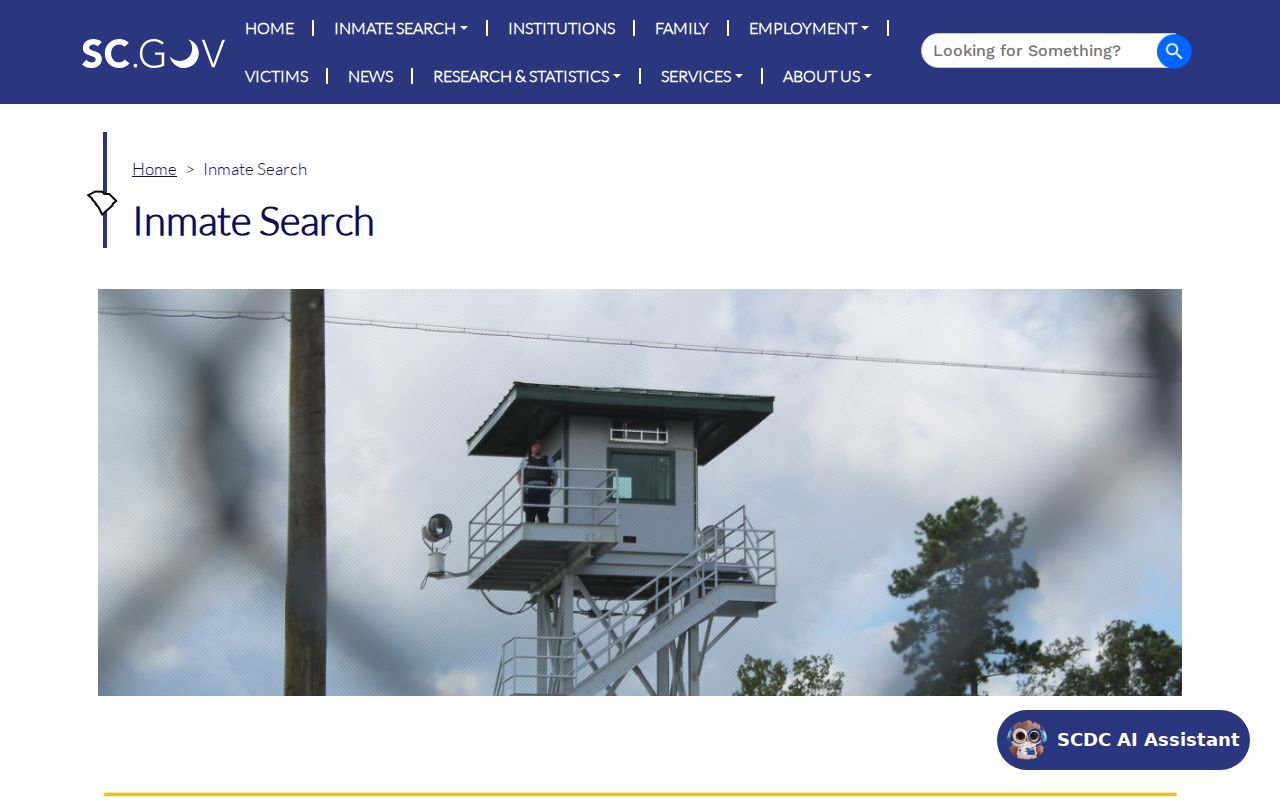
The locator covers current SCDC custody, not county jail detainees, released people, supervision-only records, juveniles, or federal prisoners.
The SCDMV driving-record service is the state source for an authorized driving history.
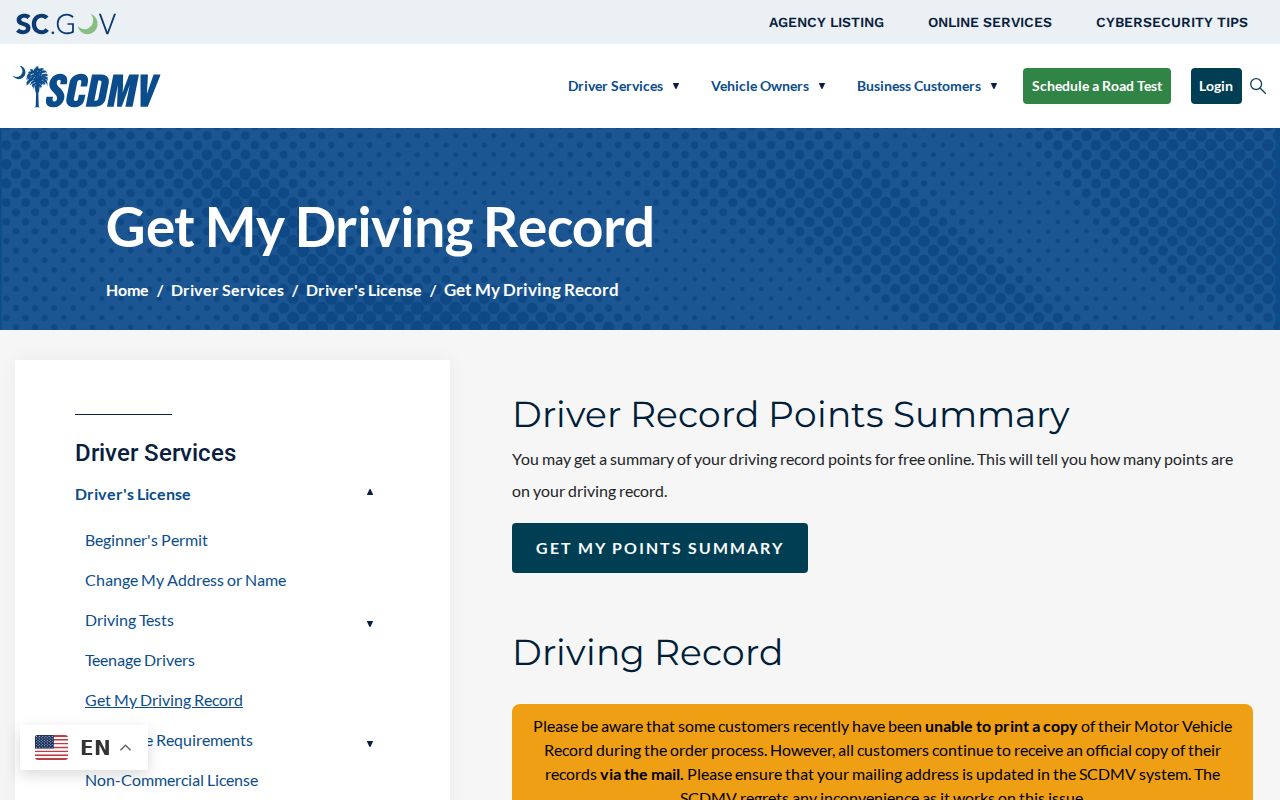
A court citation file shows the charge and disposition; the SCDMV record shows driving history and license consequences.
The DPH Vital Records program explains statewide marriage and divorce products.
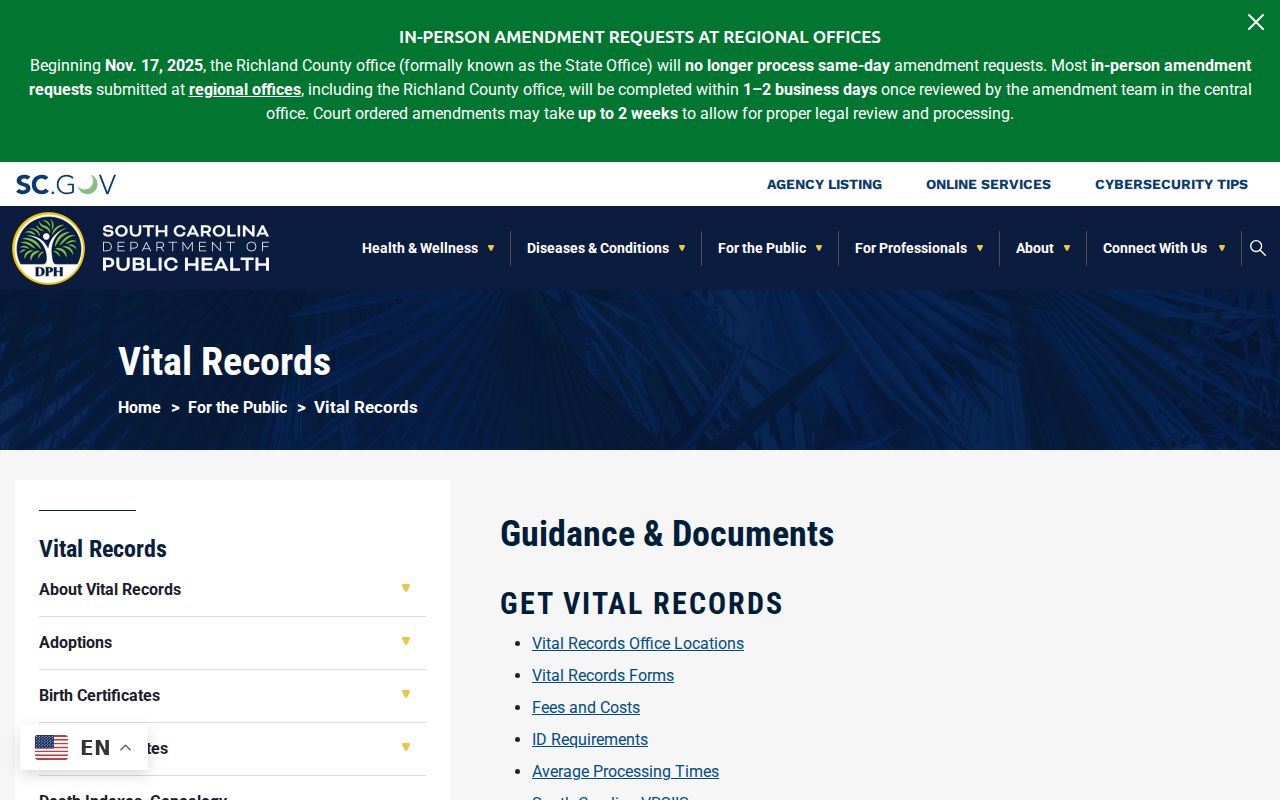
The original marriage license remains with Probate Court, and the complete divorce case remains with the filing county's Family Court Clerk.
South Carolina Court Record Access
South Carolina's Freedom of Information Act gives a right to inspect or copy public records subject to exemptions, reasonable fees, and rules protecting the records. Court access also follows Supreme Court rules and each court's control over its own file. A useful request names the case number, parties, court division, approximate dates, and exact documents. Ask for electronic copies when suitable, and state whether certification is required. The custodian need not answer a legal question or create a new report.
Key Statutes:
S.C. Code §30-4-30 provides the public-record inspection and copying framework.
E-Filing Rule 10 separates public material from confidential lists, sealed filings, and protected data.
Rule 41.1, SCRCP requires judicial process before a civil filing is sealed.
Rule 41.2, SCRCP requires redaction of specified personal identifiers.
A public body may respond about availability before producing a large request. Search, retrieval, redaction, copying, certification, and delivery can generate costs. A seal or confidentiality rule is not overcome by labeling the request as FOIA.
Restricted South Carolina Court Records
Juvenile, adoption, mental-health, and commitment material is not an ordinary public court search. Access may depend on party, parent, guardian, counsel, agency authority, statute, or court order. Sealed cases and documents remain unavailable through the public index. Social Security numbers, tax IDs, financial account numbers, minors' protected information, and confidential reference-list values must be kept from public display. Redaction can make an otherwise public document safe to release without opening its protected portions.
Expungement is different from sealing, pardon, or appeal. Eligibility turns on the charge, disposition, history, program completion, and statute. General Sessions applications go to the Circuit Solicitor where the offense occurred. Qualifying Magistrates or Municipal dismissals, not-guilty findings, and nolle-prossed matters can use a separate no-fee path. An online result alone cannot establish eligibility or completion.
Find South Carolina County Records
The filing county points to the controlling trial record. Greenville, Richland, Charleston, Horry, Spartanburg, and Lexington are the six featured high-population counties, each with its own court and public-record route. The same county-first rule applies statewide: Circuit and Family files go to the Clerk of Court, estate and marriage-license files go to Probate Court, and summary matters go to the issuing Magistrate or Municipal Court.
Greenville County
Greenville · High-volume Thirteenth Circuit and municipal records
Richland County
Columbia · Fifth Circuit, capital, and state court offices
Charleston County
Charleston · Ninth Circuit and multiple municipal courts
Horry County
Conway · Fifteenth Circuit and high-volume tourism matters
Spartanburg County
Spartanburg · Seventh Circuit and several summary venues
Lexington County
Lexington · Eleventh Circuit and suburban court records
Browse the full directory of all 46 South Carolina counties to open the court records site for any county.
South Carolina Court Record Fees
Public Index metadata and displayed public documents are generally free. Plain, certified, and exemplified copies follow the county's schedule, so the clerk should confirm page, search, certification, mailing, and delivery charges. State systems set separate fees for their own products. Current researched figures include the common charges below, though checkout and county-specific totals should be verified before payment.
- Public Index metadata
- $0.
- SLED CATCH standard report
- $25 plus the posted online service fee.
- DPH vital search and first certification
- $12 by standard mail order.
- SCDMV driving record
- Commonly $6; verify at order.
- Plain or certified court copy
- County schedule.
Read South Carolina Court Records
A charge or indictment is an accusation. It is not a conviction. Read each charge's disposition and the signed sentence or order. “Nolle prosequi” means the prosecutor elected not to continue the charge at that time. “Dismissed” may have different effects depending on whether it was with or without prejudice. A continuance moves an event. A remittitur returns an appellate matter to the lower court. A judgment may remain enforceable until satisfied, even when the main case reads disposed.
- Disposition
- The outcome of a charge or case, such as dismissal, acquittal, plea, or conviction.
- Docket
- The chronological register of events, not the text of every document.
- Expungement
- Statutory removal of a qualifying criminal record from public repositories, with limited uses sometimes retained.
- Sealing
- A court-ordered access restriction that does not necessarily destroy the record.
South Carolina Record Limits
County indexes differ in image coverage and in the summary courts loaded into the system. Accepted electronic filings often publish promptly, but clerk review, older scanning choices, outages, redaction, and local practice affect what appears. Documents filed before the privacy changes of April 2014 may have uneven image coverage. Court rosters help with scheduling but are not final proof of disposition. A no-result name search can reflect venue, spelling, age, or confidentiality rather than no record.
Note: Confirm critical facts with the South Carolina court that holds the signed filing before relying on an online summary.
South Carolina Court Record Changes
Modern South Carolina court administration grew from the revised Judicial Article adopted in 1973. It centralized administrative authority in the Supreme Court while county clerks, locally elected Probate Judges, and summary courts remained the operational custodians of many records. The permanent Court of Appeals followed in 1983. Electronic access later expanded through the statewide case-management system, county Public Index sites, and eFlex. Filing privacy rules effective in 2014 mark an important image-coverage divide because each clerk determines verification and publication of many earlier scanned documents.
Access continues to change. The Supreme Court updated its trial-court remote-communication order in 2025, and court administration has been planning improvements to the trial case-management system. Public Index home addresses stopped displaying for both existing and new cases in 2026. These developments affect how a search looks and how a hearing may occur, but they do not move custody of the original case away from the responsible court office.
Temporary system maintenance can also interrupt eFlex or county document retrieval. An outage does not automatically extend a filing or hearing deadline. Check official South Carolina court news, keep the clerk's contact route available, and follow any controlling court order.
South Carolina Court Records FAQ
Is there one statewide trial search?
There is one official gateway, but users select a county Public Index. Participating Municipal Courts are listed separately. Appellate matters use C-Track, and nonparticipating summary courts must be contacted directly.
Are online court images certified?
No. A downloaded image is useful for review, but official proof generally requires a certified copy from the Clerk, Probate Court, Magistrate, Municipal Court, or appellate clerk that keeps the record.
Why is a home address missing?
South Carolina stopped displaying home addresses on the Public Index for existing and new cases beginning in 2026. Other identifiers are redacted under court privacy rules.
Does SLED CATCH show active warrants?
No. CATCH is a name-based criminal-history product. Active warrant checks require the issuing court or law-enforcement agency because no comprehensive public statewide warrant portal was located.
Where are divorce and marriage records?
The Family Court Clerk keeps the divorce case and decree. Probate Court keeps the original marriage license. DPH provides eligible requesters with its marriage-certificate and divorce-report products for covered years.
Can FOIA open a sealed case?
No. FOIA does not override a seal, adoption or juvenile confidentiality, protected medical content, or required redaction. Ask the custodian for the authority and any segregable public part.